
Pregnancy and the thyroid

Important for foetal development

What is the role of the thyroid?
Shaped a bit like a butterfly, the thyroid is a gland in the front part of the neck. It plays an important role in regulating your metabolism and helps to manage the energy expended by your body. It is essential to your baby’s growth and the development of its brain.
A gland shaped like a butterfly
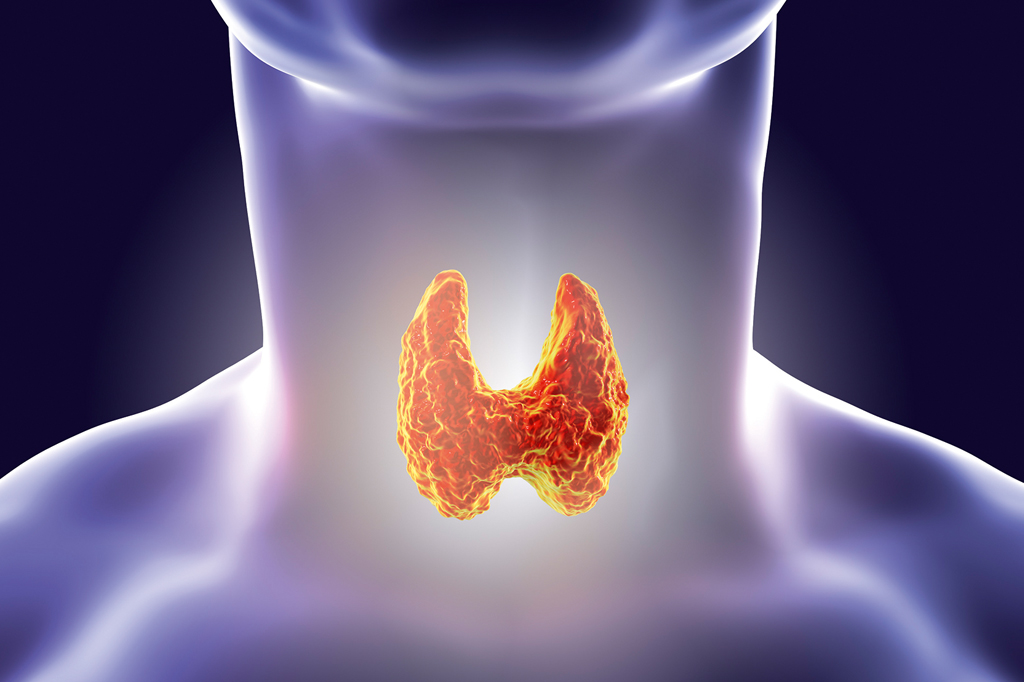
The thyroid and thyroid hormones
The gland secretes thyroid hormones known as T4 (thyroxine) and T3 (triiodothyronine). Secretion is regulated by a third hormone known as TSH (thyroid-stimulating hormone), which comes from your brain.
Hyperthyroidism and pregnancy
A hyperactive thyroid gland (hyperthyroidism) may cause premature delivery, low birth weight and maternal hypertension (high blood pressure).
Symptoms of hyperthyroidism
They may be subtle during pregnancy.
• Intolerance to heat
• Skin hot to the touch
• Sweating
• Shivering
• Weight loss
Hypothyroidism and pregnancy
Conversely, if the mother’s thyroid gland is not active enough (hypothyroidism), hormone levels will not be sufficient for the baby to grow normally or for its brain to develop as it should. The foetus is unable to produce these extremely important hormones during early pregnancy (first trimester), so the mother’s hormones cross the placenta and provide them. The foetal thyroid gland only becomes active from the second trimester of pregnancy.
Symptoms of hypothyroidism
They may be subtle during pregnancy.
• Tiredness
• Unexplained weight gain
• Dry skin
• Sensitivity to cold
• Muscle weakness
Post-partum thyroiditis
Post-partum thyroiditis can occur during the months following pregnancy. It is caused by the presence of anti-TPO antibodies, which damage thyroid tissue, thereby passively releasing thyroid hormones into the blood and causing hyperthyroidism. This is followed in the recovery phase by temporary or permanent hypothyroidism in one to two percent of women after delivery.
Anti-TPO antibodies may be detected as early as the first trimester of pregnancy.
When do thyroid hormones need to be measured?
Ideally, thyroid hormones should be measured and anti-TPO antibodies screened during the first trimester of pregnancy. A normal TSH level and without detecting any anti-TPO antibodies are sufficient to rule out any thyroid problem. If thyroid hormone levels are found to be abnormal, a follow-up regime and effective treatment is prescribed.
Advice
To help ensure your pregnancy goes smoothly and your baby develops as it should, you need to inform your gynaecologist about any indication of hyperthyroidism or hypothyroidism (even if symptoms have improved).
Measurements of both TSH and anti-TPO antibodies provide a quick and accurate picture of how your thyroid gland is working. Although not obligatory, these measurements are recommended. Pregnancy does involve significant physiological changes to metabolism. It can also affect thyroid function without you showing any specific symptoms (subclinical thyroiditis).
Talk to your healthcare professional.